What a retaining wall does
It holds soil in place where the ground changes level. Soil is heavy, and wet soil is much heavier, so walls need strength and drainage.
Materials
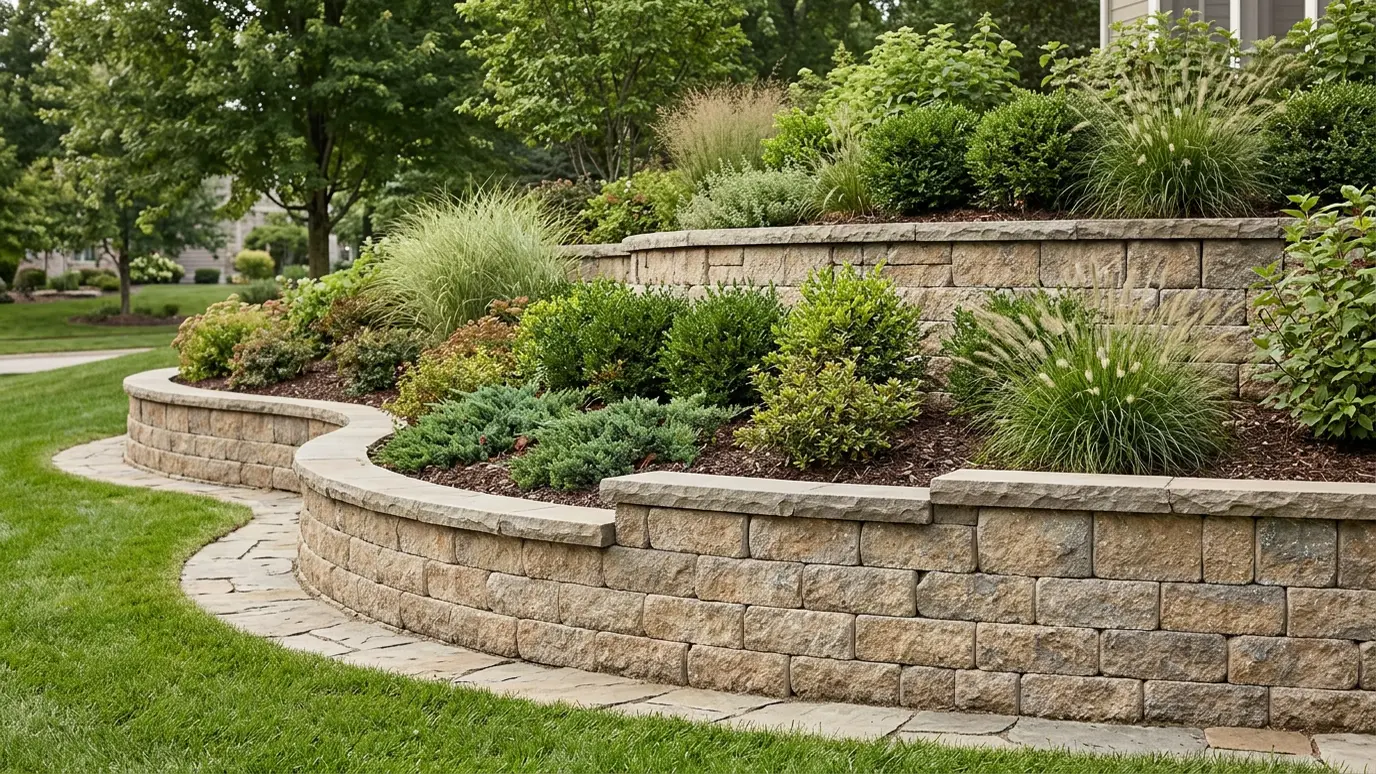
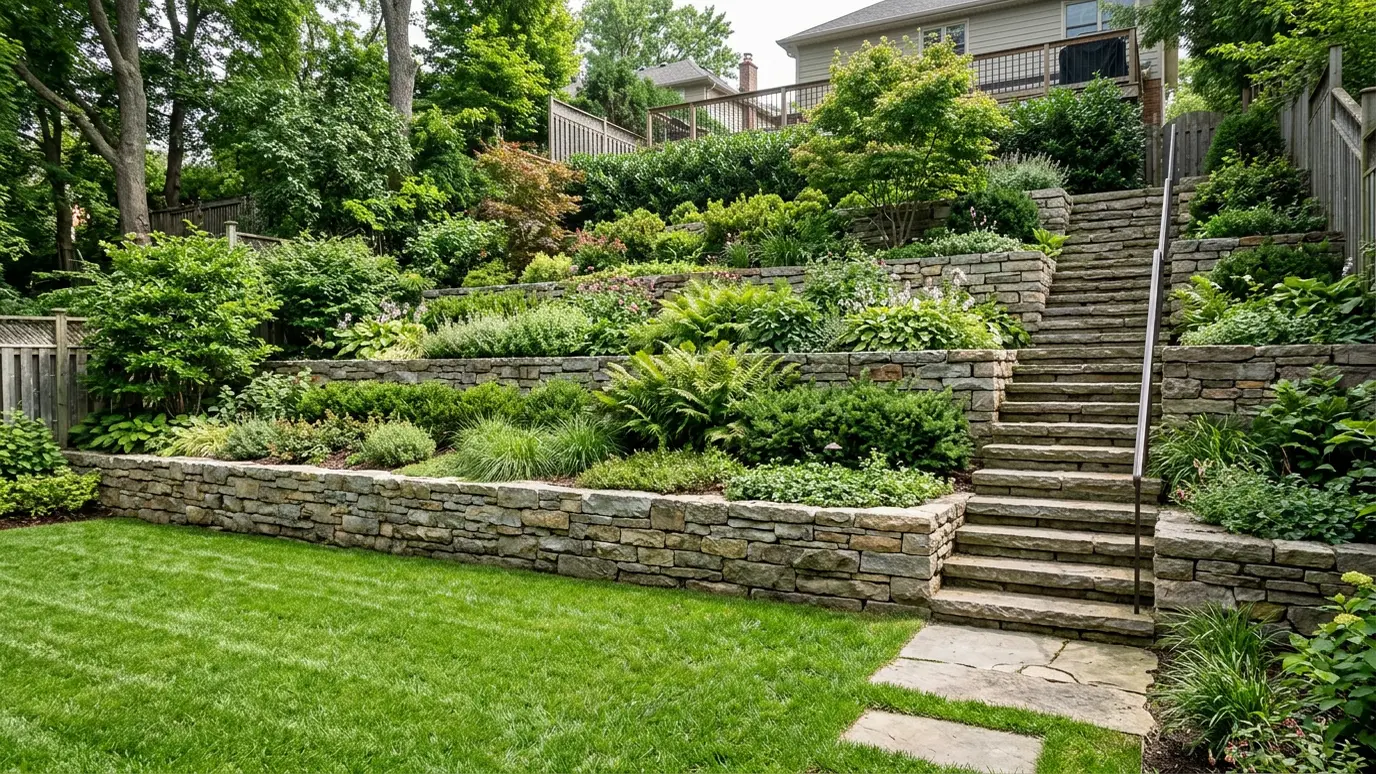
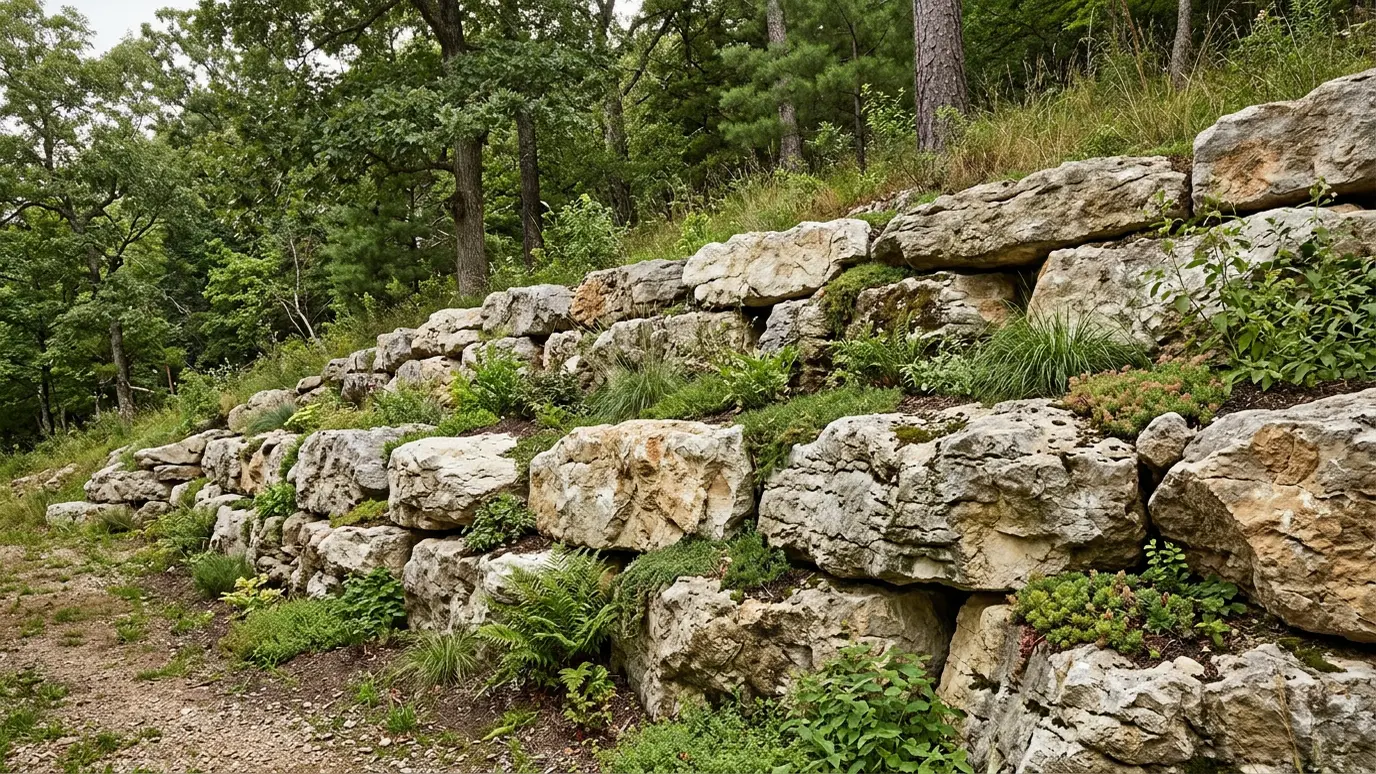
Segmental concrete block is the most common: strong, consistent and easy to build tall. Natural stone and boulders look more organic. Timber is low in cost and shorter-lived.
Height and engineering
Short walls can be built following manufacturer guidance. Taller walls, walls under driveways or structures, and walls with slopes above need engineered plans.
Base and drainage
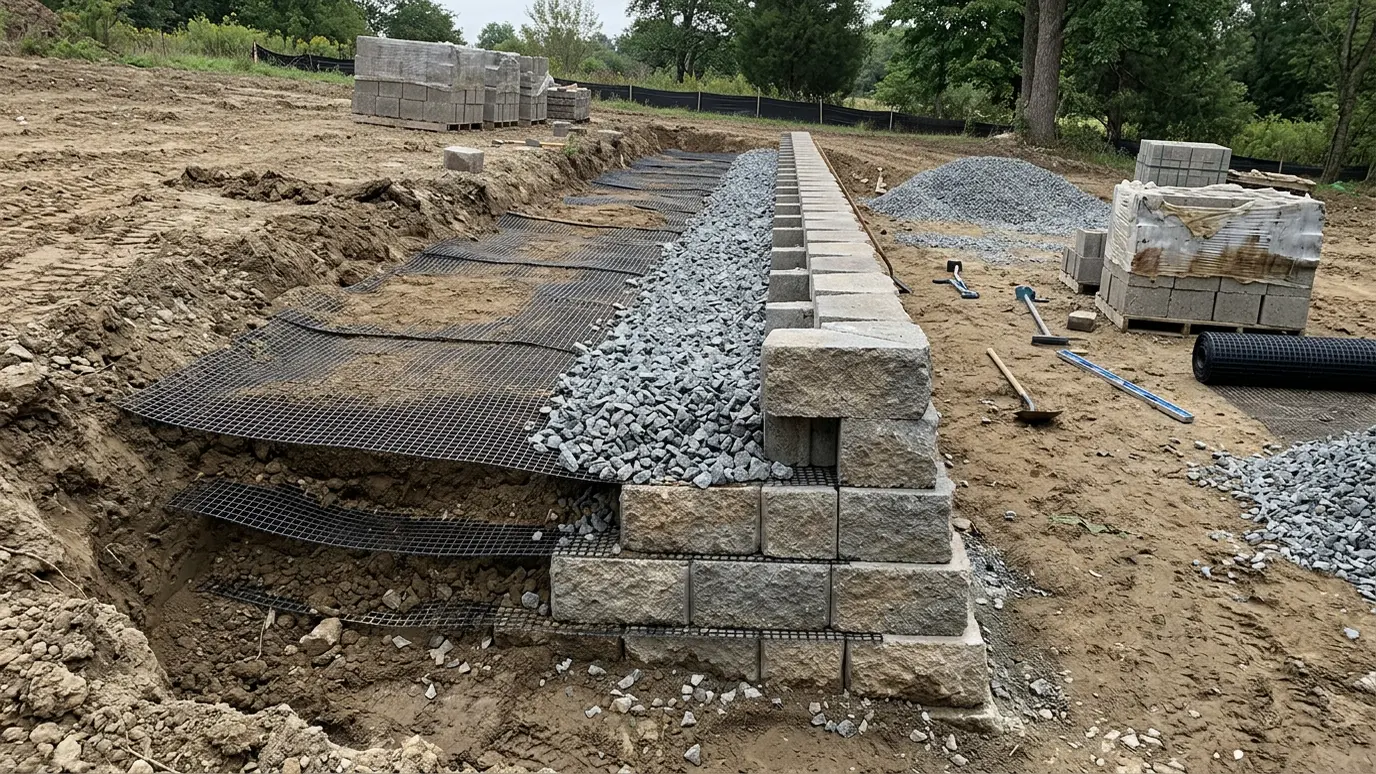
A compacted stone base, drainage stone behind the wall and a pipe that leads out are what keep walls standing. Most failures come from trapped water.
Geogrid reinforcement
Layers of geosynthetic grid tie the wall into the soil behind it, allowing taller and stronger walls than a freestanding stack of block.
Finishing
Caps, steps, planting and lighting turn a wall into a landscape feature. We plan these details with the wall.
Invest in drainage and base, and ask whether engineering is required for your wall height and location.