Start with the slope
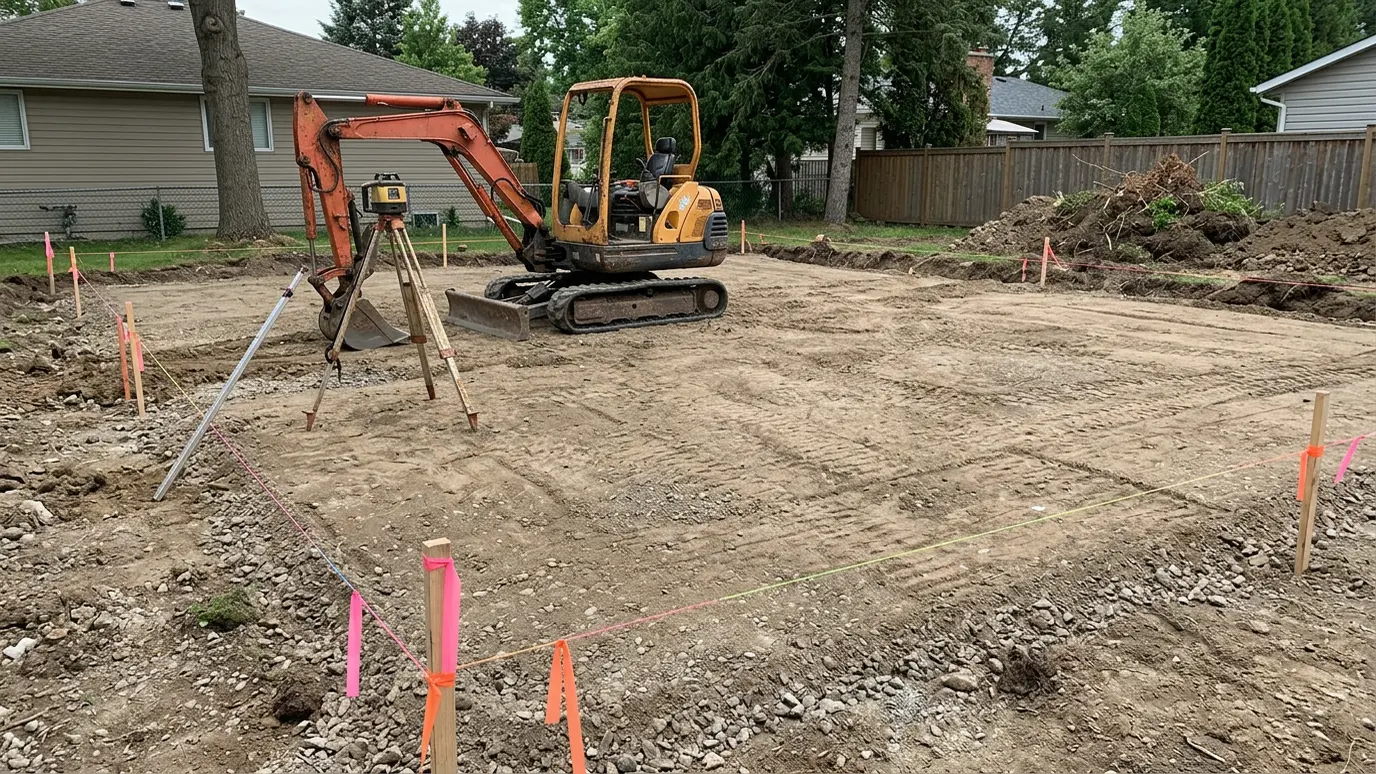
Surfaces should slope gently away from the house. A small, consistent slope moves water without being noticeable. Flat or inward slopes lead to pooling.
Downspouts
Roof water is a large share of yard water. Extend downspouts well away from foundations, or tie them into buried pipe that leads to a safe outlet.
Surface drains and catch basins
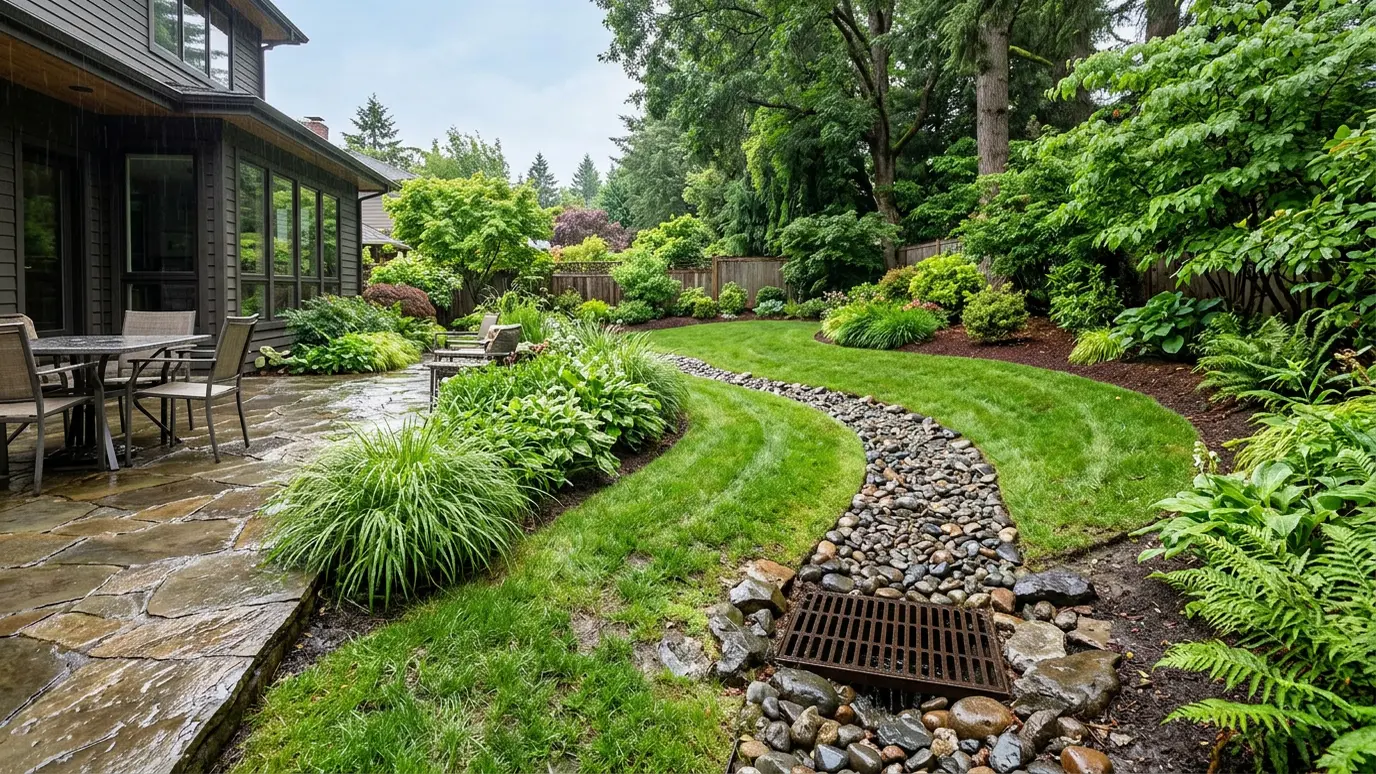
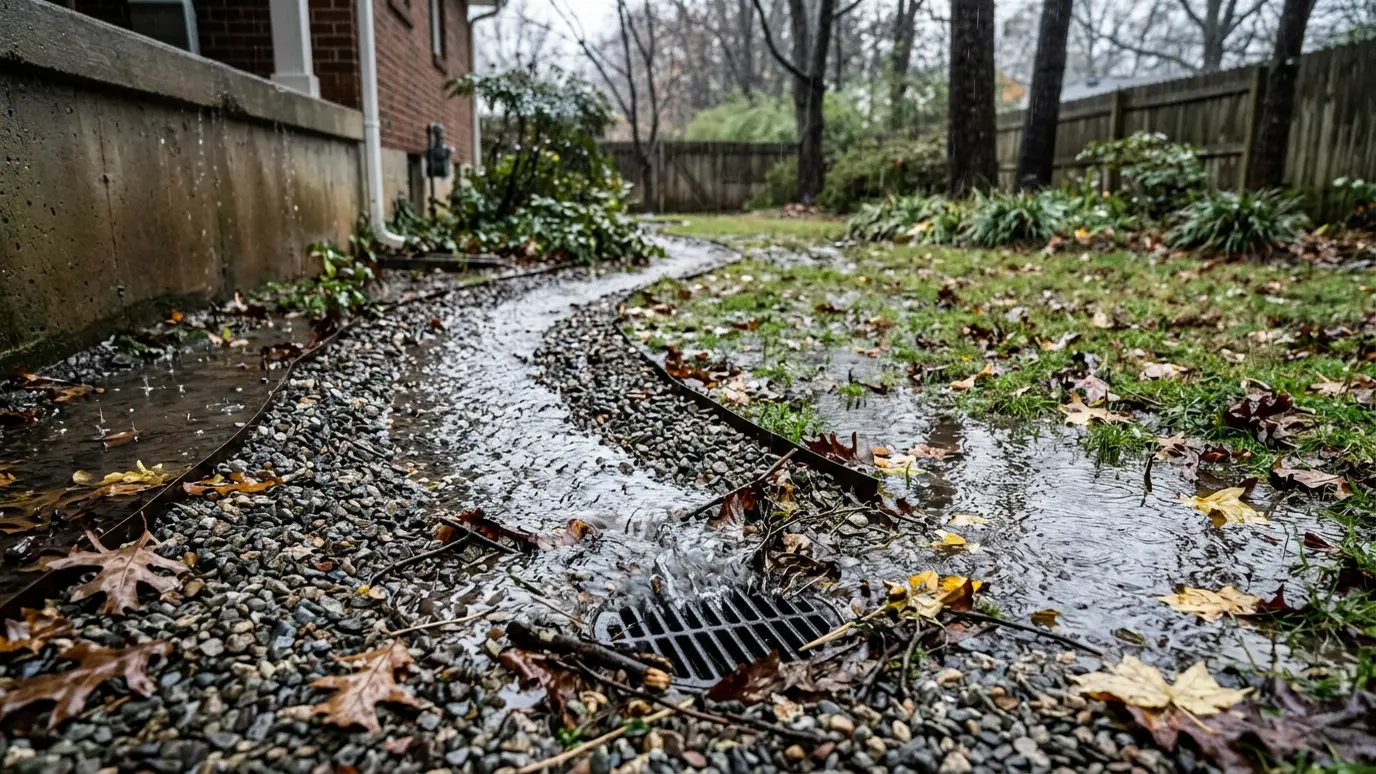
Low spots collect water. Catch basins and grates collect it and send it into pipe. Place them where water collects, and make sure the outlet works.
French drains
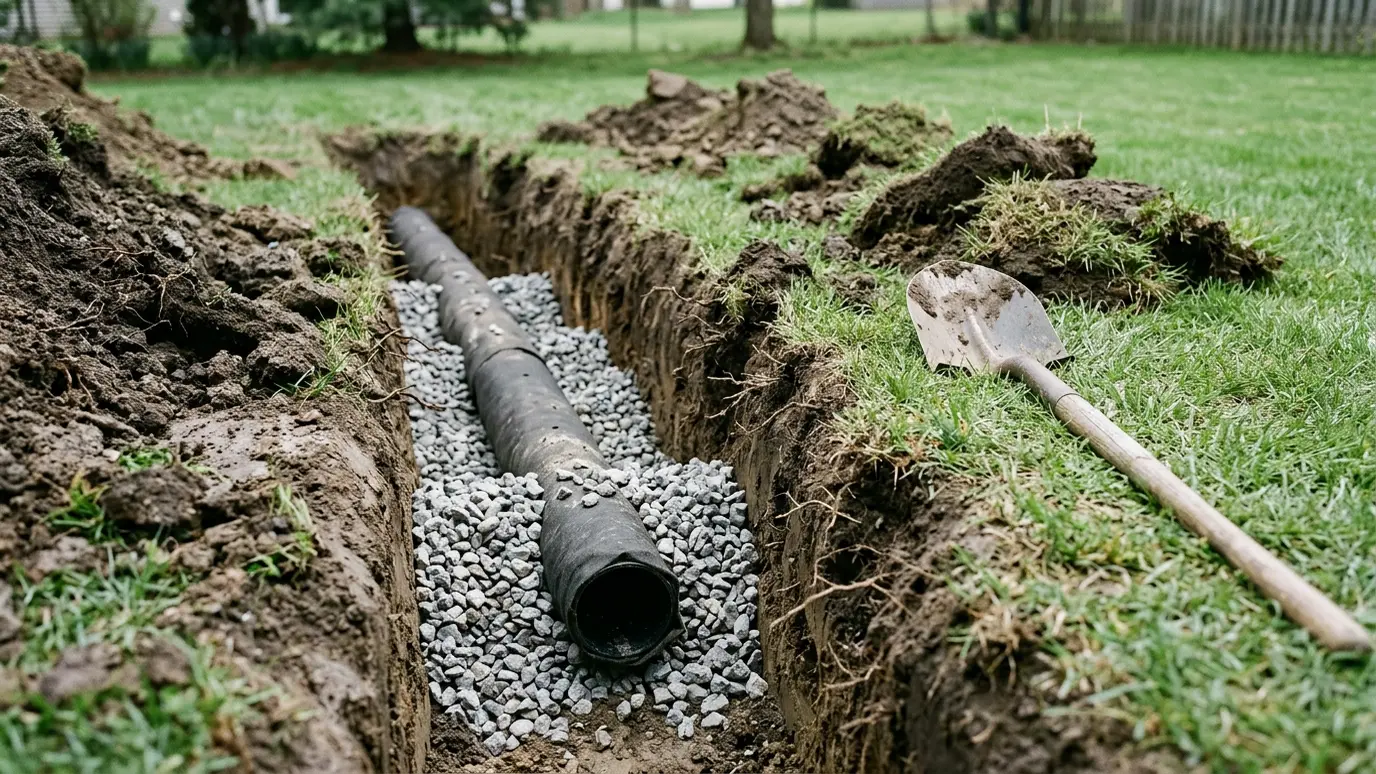
A trench with perforated pipe in gravel, wrapped in fabric, collects subsurface water. It needs slope and a daylight outlet, or it becomes a pond underground.
Behind walls
Retaining walls hold back water as well as soil. Drainage stone and pipe behind the wall let water escape and prevent pressure buildup.
Rain gardens and dry creek beds
Where water can be slowed and soaked in, a rain garden or dry creek bed handles runoff attractively.
Solve water first. Everything built over a wet yard fails sooner.